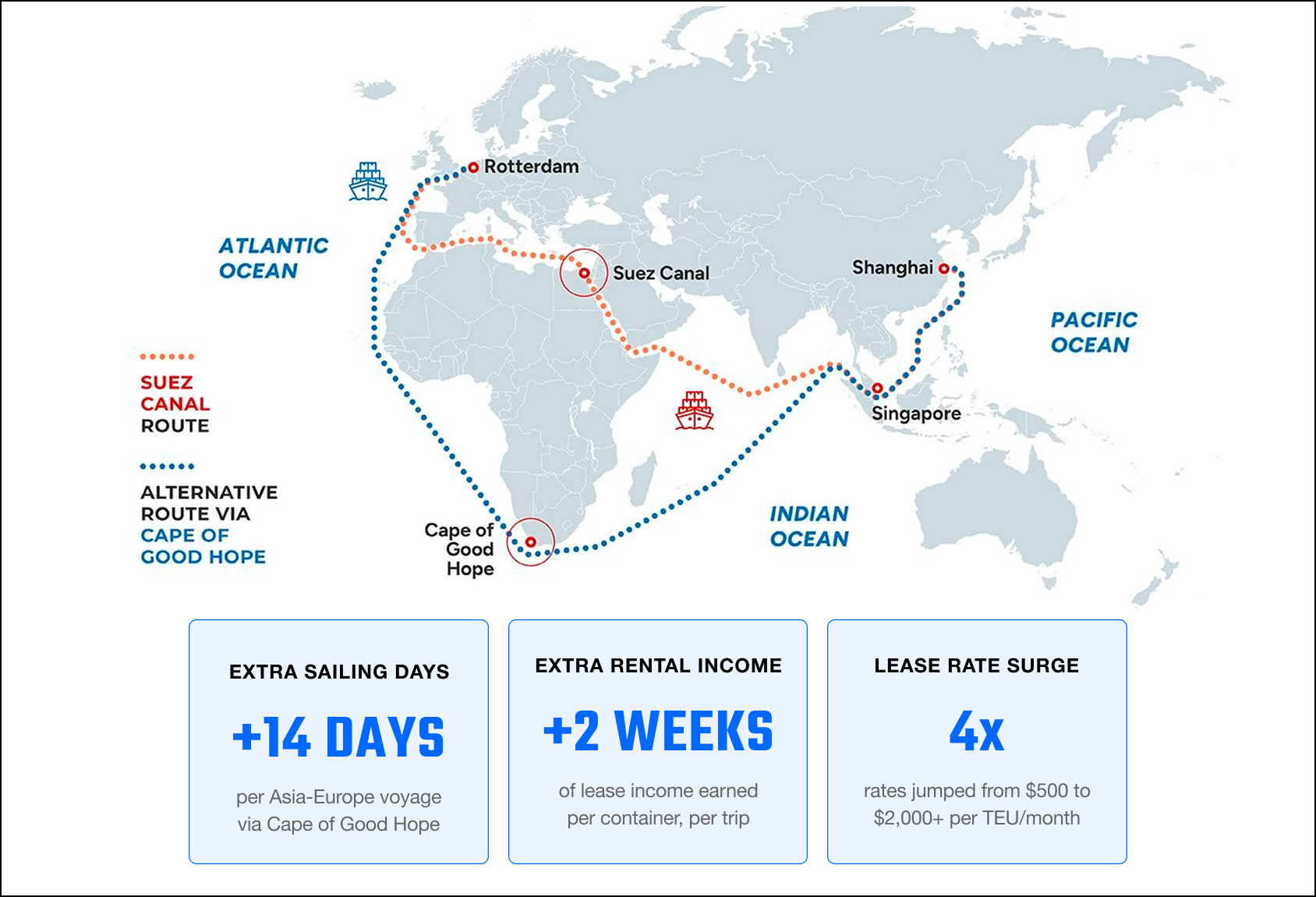
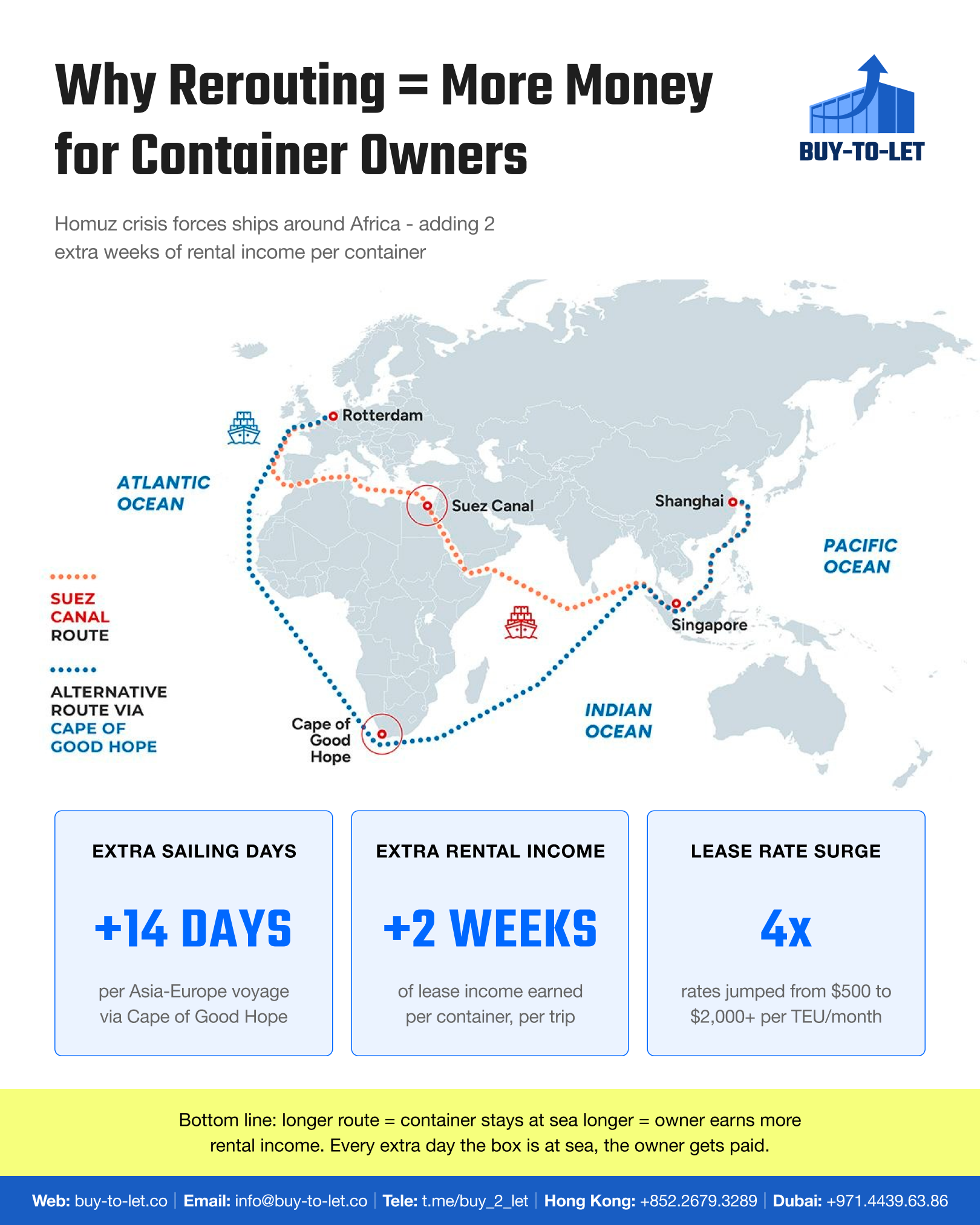
While the world watches Hormuz and the Red Sea, a quieter story is playing out along the Atlantic.
Every Asia-Europe vessel rerouting around the Cape of Good Hope passes West Africa. And sitting right on that route is Dakar — one of the most strategically positioned ports on the continent.
The Port of Dakar has been operating since 1866. Today it handles roughly 90% of Senegal’s foreign trade, serves as a transit hub for landlocked countries like Mali, and is operated by DP World — the same global operator running terminals from Dubai to London. Container capacity sits at 900,000 TEUs, with modern quay cranes and deep-water access.
As rerouting traffic increases, ports on the Cape route don’t just benefit from passing ships — they attract new calls, new cargo, and new investment. Dakar is already positioned for exactly that.
And it’s not stopping there. A brand new deep-water port at Ndayane, 50km south of Dakar, is currently under development — built to handle the next generation of mega-vessels.
Most investors are watching Asia. Most are watching Europe. Very few are watching West Africa.
That’s exactly where the opportunity is.
 For Container Investors