2/5/2026
Ask a hundred people what they believe to be the modern world’s most impactful inventions, and you’ll get a hundred different answers. The lightbulb. The smartphone. Antibiotics. Coffee.
Allow me to propose a completely different answer: The shipping container.
None of those previous answers get very far without the humble shipping container. It’s what you’re wearing. It’s what you’re sitting on. It’s the coffee in your mug and the phone in your pocket. It all spent time in a shipping container.
70 years ago this month, the invention that would come to reshape both the world’s economy and our region’s landscape was put into motion on the shores of Port Newark. It was all thanks to a trucker who was getting impatient.
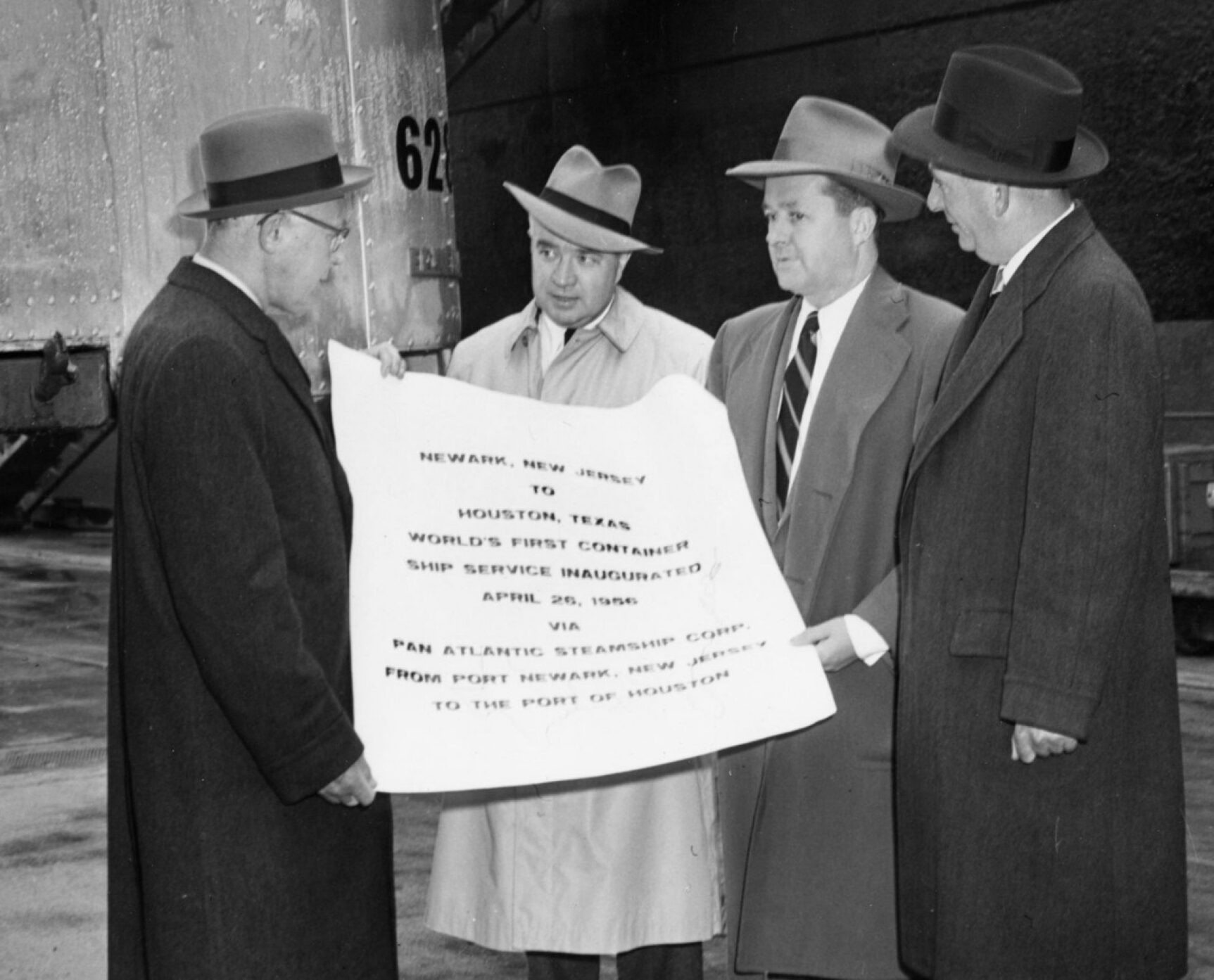
Malcom McLean, right, and other dignitaries marked the world’s first container ship service on the shores of Port Newark in April 1956. Courtesy of the Containerization and Intermodal Institute.
For centuries, loading a ship meant workers using their hands: hauling individual crates, boxes, bales and barrels from ship to shore and back again. It took days, cost a fortune, and as you might expect, sometimes stuff went missing.
North Carolina truck driver Malcom McLean spent years watching this lumbering dance from his truck cab. He knew things could move faster. His idea seems like common sense now: Instead of hauling everything off of the ship and then putting it into a truck, just place the truck’s trailer onto the ship.
McLean retrofitted a World War II-era oil tanker to carry 58 steel containers, and on April 26, 1956, the SS Ideal-X left Port Newark bound for Houston. The idea quickly caught on, and shipping costs started dropping dramatically. Moving containers with cranes meant much less manpower was needed, and the quick turnaround times at the dock meant ships had more time to make more trips.
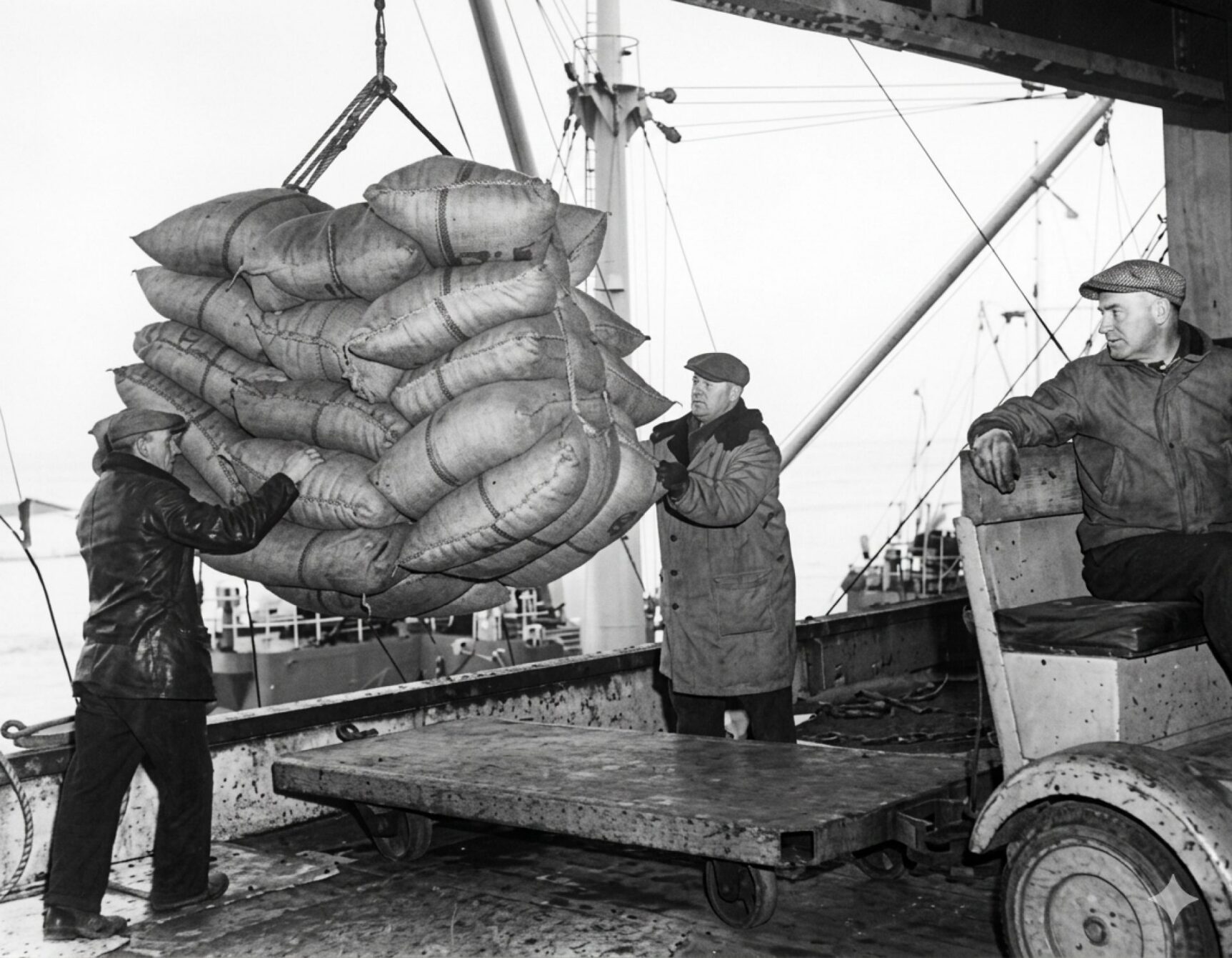
The old way of doing things: hauling crates, boxes, bales and barrels from ship to shore and back again. Courtesy of the Containerization and Intermodal Institute
A television, a pair of sneakers, a piece of furniture, a car part, things that once cost a small fortune to move across an ocean, could suddenly travel thousands of miles for a fraction of the price. Today’s dominant companies, including Walmart and Amazon, owe their entire business strategies to the conveniences the shipping container unlocked.
After the Ideal-X’s maiden voyage, McLean made another, even more fateful move: He decided to give his container patents away for free. That enabled the entire world to operate on standardized equipment and measurements. His unassuming creation on the shores of New Jersey soon rippled across the world.
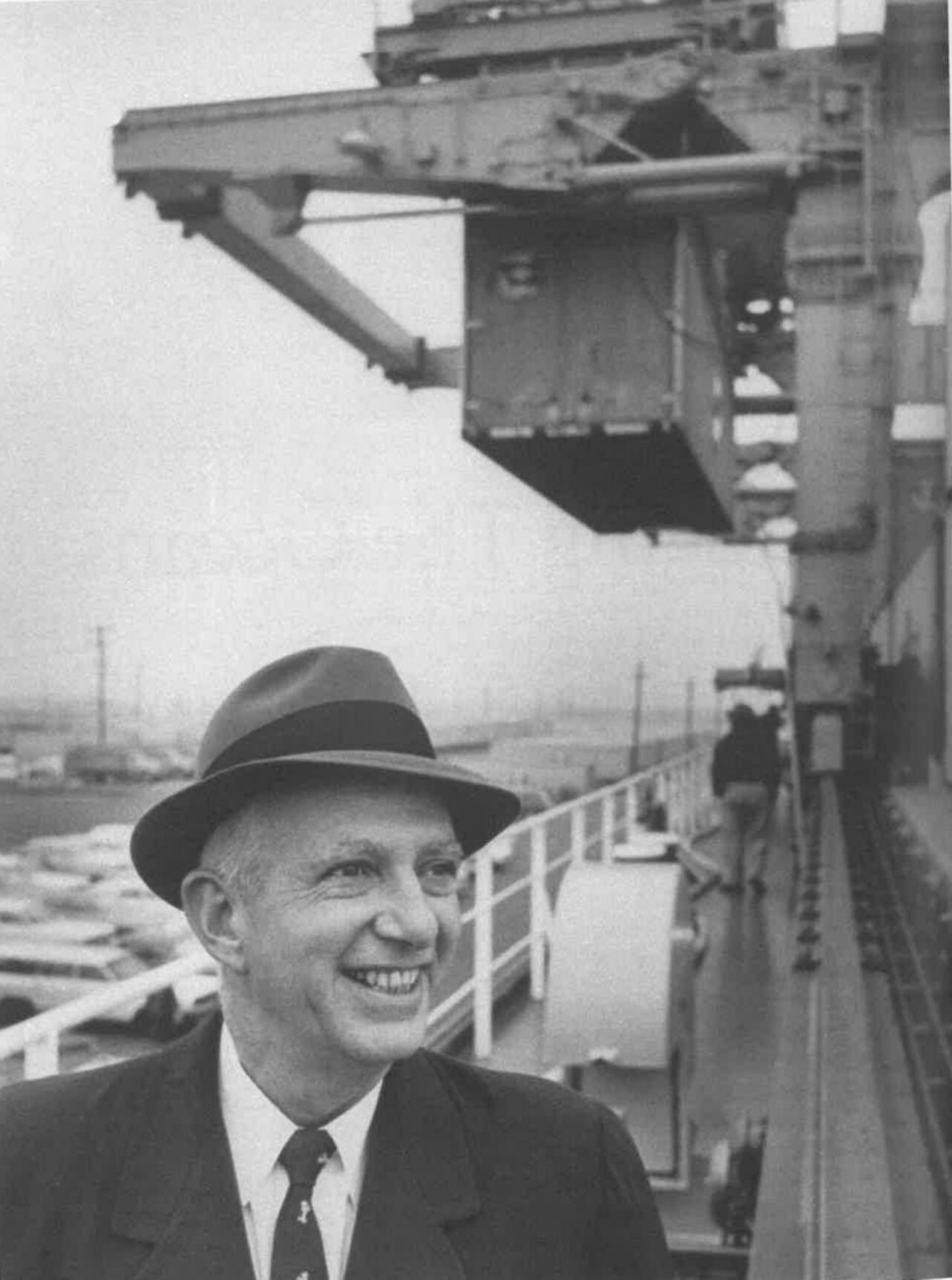
Malcom McLean watches over his new container operation. Courtesy of the Containerization and Intermodal Institute.
But the container didn’t come without other consequences. The same economics that made it cheaper to manufacture goods overseas contributed to a hollowing-out of American factory towns and industries, and the thousands of longshoremen who once worked the docks saw their numbers shrink dramatically within a generation. The ships and trucks that keep it all moving also carry a significant environmental cost. It’s a challenge we are actively working to address through ongoing investments in cleaner equipment and more sustainable operations, and we’ve committed to reaching net-zero carbon emissions across our facilities, including the seaport, by 2050.
As transformative as the shipping container was for the global economy, it also had a profound impact on the development of this region. For the first half of the 20th century, the coastlines of Manhattan, Brooklyn, Hoboken and Jersey City were filled with miles of piers jutting out from the shoreline, alongside workers who built livings and neighborhoods based on the old hauling-and-carrying methods. New York was put on the map thanks to its water access.
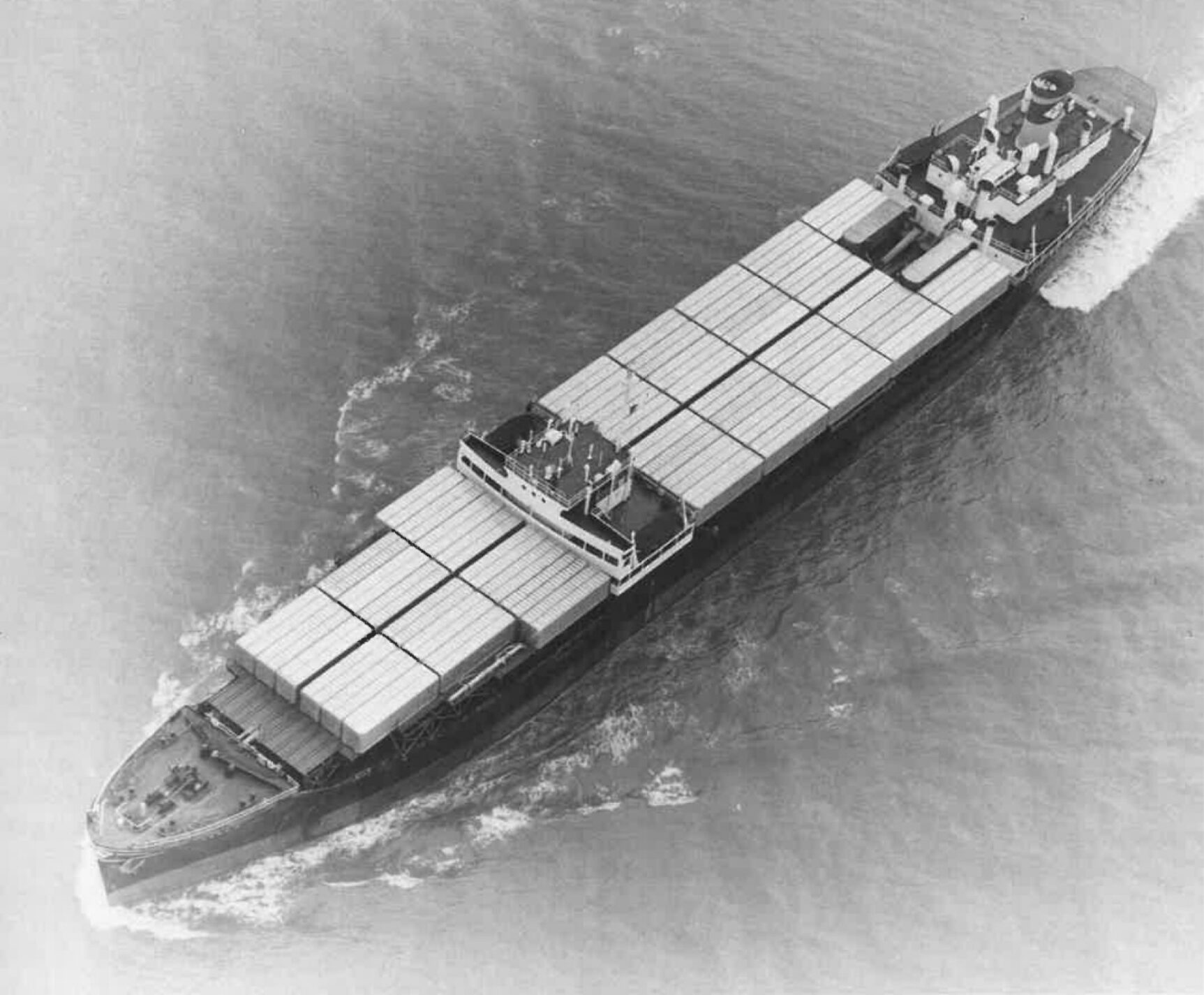
An aerial view of the Ideal-X and its 58 containers. Courtesy of the Containerization and Intermodal Institute
Container operations require a lot of space as boxes get stacked and sorted, space that wasn’t readily available in the densely packed city. As the container caught on, activity at those urban docks slowed down. Shipping’s center of gravity in the region gradually shifted to where more land was available – namely Port Newark, Elizabeth, and Staten Island.
At the Port Authority, it didn’t take long for us to go all-in on containerized shipping. Six years after McLean’s maiden voyage, and just down the shore from where it took place, we opened the Elizabeth Port Authority Marine Terminal in 1962, the world’s first purpose-built container terminal.
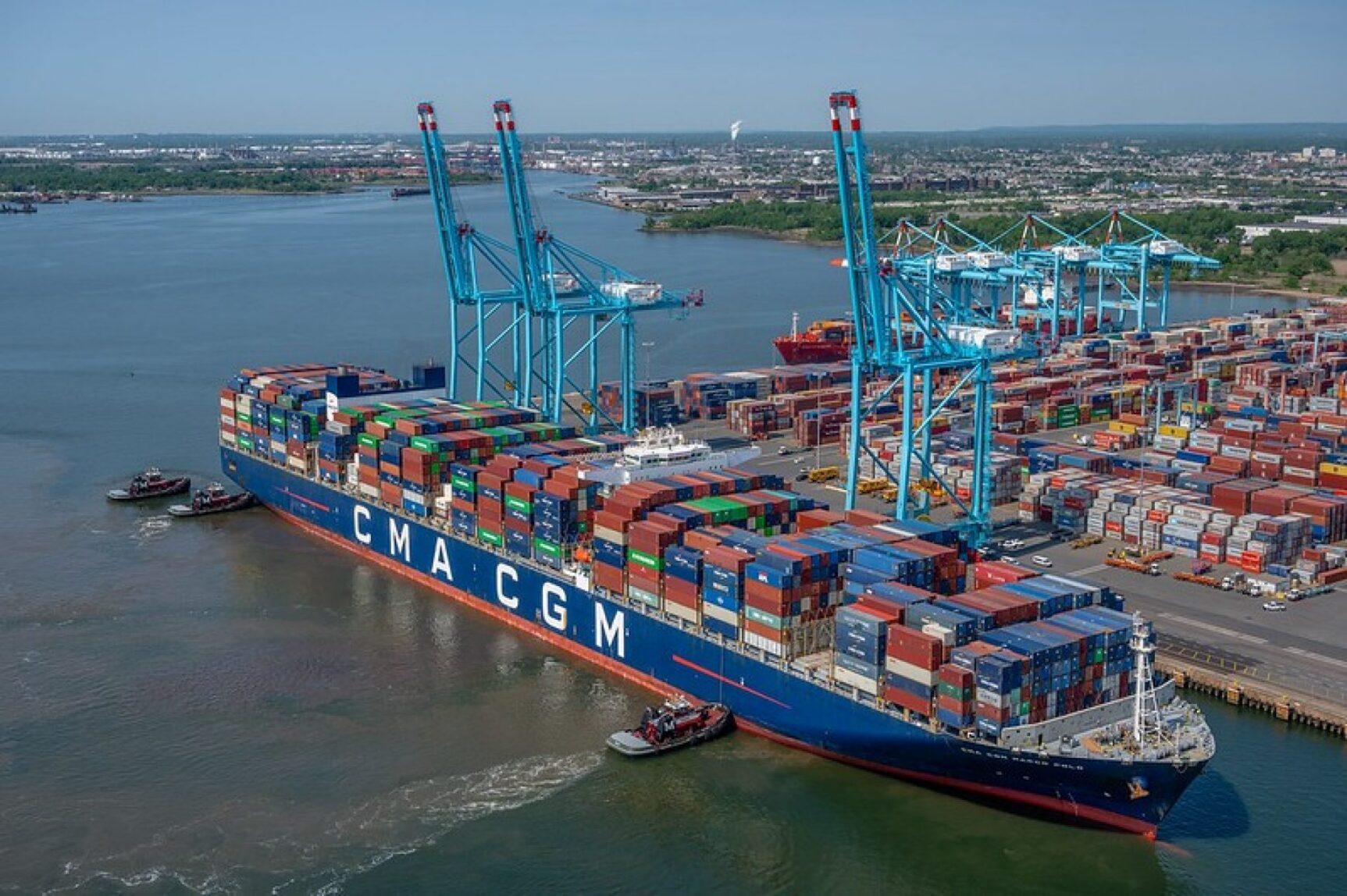
Six years after the Ideal-X’s voyage, the Port Authority opened the world’s first purpose-built container terminal, the Elizabeth-Port Authority Marine Terminal. Today, the equivalent of about 145 Ideal-X loads can arrive on a single ship.
58 containers left our port on McLean’s maiden voyage in 1956. Fast forward 70 years, and 4.9 million containers (8.9 million twenty-foot equivalent units, or TEUs, if you want to use the industry’s standard measurement) moved through the port in 2025, enough to make us the East Coast’s busiest port and among the top three busiest in the nation. A normal day might bring 8-10 ships into the port, each carrying the equivalent of around 145 Ideal-X loads.
Meanwhile, the land that containers rendered largely obsolete has since been turned into some of the region’s most cherished public spaces, including Brooklyn Bridge Park, Hudson River Park, and waterfront esplanades spanning Hoboken and Jersey City, along with thousands of new homes and apartments offering scenic views. At the same time, North Jersey took on the highways, warehouses, and logistics infrastructure needed to support the massive container operation growing along Newark Bay.
The next time you order something online and it shows up two days later, there’s a very long chain of events that made that possible. Follow it back far enough and you end up at Berth 24 in Port Newark. For all that has changed in the 70 years since, we’re still making use of McLean’s simple but revolutionary thought: just put the box on the ship.
 For Container Investors
